Europe With a Toddler: A Practical 40:40:20 Itinerary
Plan Europe with a toddler using the 40:40:20 formula: a slower route through Munich, Austria, Paris and the Netherlands, with transport and toddler tips.
13 min read

Travelling through Europe with a toddler is possible without turning every day into a race. The trick is to plan less, protect the basics - sleep, food and play - and leave enough space for the trip to surprise you.
Quick answer: For a multi-country Europe trip with a toddler, plan one anchor activity and one flexible activity per day. Use trains between major cities, rent a car only where it meaningfully reduces transfers, and divide your time using the 40:40:20 formula: 40% for the adults, 40% for the toddler and 20% completely unplanned.
This flexible route links Munich, Salzburg, Hallstatt, Obertraun, Paris, Amsterdam, Utrecht, Giethoorn and Den Bosch. Each destination also works on its own, so you can shorten, extend or rearrange the itinerary.
Important: Transport times, ticket rules and opening hours change. Recheck official operators before booking.
In this guide
- The 40:40:20 formula
- How many days to plan
- Germany: Munich
- Austria: Salzburg, Hallstatt and Obertraun
- France: Paris
- The Netherlands: Amsterdam and day trips
- How to connect the route
- The toddler travel playbook
- Before-you-go checklist
- Frequently asked questions
The 40:40:20 formula
A family holiday works best when nobody's needs disappear from the itinerary.
- 40% for you: the neighbourhoods, views, food and landmarks you genuinely want to experience.
- 40% for your toddler: playgrounds, animals, gardens, boats, open spaces and time to move.
- 20% left free: no tickets, no schedule and no pressure. Stop for a snack, return to the hotel early or follow a street that looks interesting.
That unplanned 20% is not wasted time. It is often where the best family memories happen.
The one-plus-one pacing rule
For most toddler days, one anchor activity plus one flexible activity is enough. The anchor might be a zoo, castle or boat ride. The flexible activity might be a park, café or neighbourhood walk that can be shortened without losing money or creating stress.
How many days do you need?
For the full route, allow roughly 15 to 18 days, depending on your travel pace and whether you include every day trip.
- Munich: 3-4 days
- Salzburg: day trip or 1 night
- Hallstatt: 1 day
- Obertraun: half a day, paired with Hallstatt
- Paris: 3 days
- Amsterdam: 3-4 days
- Utrecht: 1 day
- Giethoorn: 1 day
- Den Bosch: half a day to 1 day
Short on time? Choose two bases, such as Munich and Amsterdam, and use day trips to add variety without repeatedly packing up a toddler.
Munich, Germany: 3-4 days
Munich is a strong first base because it combines a walkable centre, generous green space and an easy mix of adult and child-friendly activities.
What to do in Munich
- Start at Marienplatz and explore the Old Town on foot.
- Join a short, flexible walking tour rather than a long fixed itinerary.
- Make simple food stops for a pretzel or döner kebab.
- Give Munich Zoo a proper half-day instead of squeezing it between other sights.
- Use the English Garden as a reset: meadows, streams and playground time help everyone slow down.
- Take a full-day trip to Neuschwanstein Castle if your toddler handles longer travel days well.
Munich with a toddler: what actually helps
The English Garden is not a filler stop - it is part of the plan. After a busy Old Town morning, let your child move freely while the adults enjoy the landscape.
For Neuschwanstein, reserve the castle visit ahead, travel from Munich toward Füssen and keep the rest of the day light. A stroller-and-carrier combination is useful for hills, queues and uneven ground.
Austria: Salzburg, Hallstatt and Obertraun
Salzburg: day trip or 1-night base
Salzburg can work in two different ways, depending on whether Hallstatt is part of your route.
- If you are skipping Hallstatt: visit Salzburg as a focused day trip from Munich.
- If you want to visit Hallstatt: stay one night in Salzburg and use it as your base for a Hallstatt road trip the next day.
The drive from Salzburg to Hallstatt takes roughly 1.5 hours and the mountain-and-lake views along the way are genuinely breathtaking. If you would rather not drive, public transport options are available too; check the live journey planner for your dates and allow extra time for connections.
A realistic Salzburg sightseeing route is:
- Mirabell Gardens
- Salzburg Old Town
- Salzburg Cathedral
- Funicular ride for the city views
- Unstructured café, snack or wandering time
The key is not trying to complete Salzburg. Mirabell to the Old Town, cathedral and funicular gives you the classic experience without overloading the day. Direct trains connect Munich and Salzburg, so the city is easy to reach whether you are visiting for the day or staying overnight.
A useful benefit for overnight guests
Guests staying in registered accommodation in Salzburg province receive the Salzburg Verkehr Guest Mobility Ticket for the duration of their stay. It covers public transport across Salzburg province, including city transport, regional buses, S-Bahn services and participating regional or long-distance trains. The ticket is normally issued by your accommodation at check-in, and some hosts can send it in advance for your arrival journey within the province. Confirm the latest details with your accommodation before travelling.
This makes a one-night Salzburg stay especially practical for families: enjoy the city at a slower pace, use the mobility pass locally and start the Hallstatt trip without first travelling back from Munich.
Hallstatt: 1 day
Hallstatt is at its best when you focus on the lake, town and Alpine views.
- Walk through the lakeside town at an easy pace.
- Take the Salzberg funicular for the Skywalk views if it is operating.
- Skip the salt mine if it would make the day too long.
- Leave time for lunch and simple lakeside wandering.
For this route, staying one night in Salzburg and driving to Hallstatt the next morning can be worth it: the journey is roughly 1.5 hours, reduces transfers, makes toddler gear easier to manage and lets you add Obertraun. If you prefer public transport, plan for train and bus connections; when arriving via Hallstatt station, the final connection into town is by ferry.
Planning note: The Hallstatt funicular, Skywalk and salt mine reopened after construction in 2026. Operations can still change, so confirm with the official operator before travelling.
Obertraun: half a day
Obertraun is the toddler-friendly release valve for a Hallstatt day. It is less about ticking off sights and more about enjoying the lake and mountains while your child gets real play time.
- Stop beside the lake for the views.
- Find a local playground.
- Have a slow lunch or snack.
- Let the toddler reset before the drive back.
It is only a short drive from Hallstatt and can be more rewarding with a young child than adding another ticketed attraction.
Paris, France: 3 days
Paris with a toddler becomes much easier when you stop treating museums as mandatory and let neighbourhoods, views and the river carry the trip.

Golden-hour light beside the Seine - a gentle way to end a family day in Paris.
A simple three-day Paris plan
Day 1: Montmartre
Wander the neighbourhood, see Sacré-Coeur and keep the route flexible. Expect hills, stairs and crowds.
Day 2: Eiffel Tower and Trocadéro
Focus on the grounds, the views and the space around the landmark. Add a Seine-side picnic so your toddler can move rather than sit through another formal meal.
Day 3: Saint-Germain and the Seine
Mix food and shopping with an evening river cruise. A sunset sailing can combine daylight, golden-hour views and the Eiffel Tower sparkle in one low-effort activity.
Consider saving the Louvre for an adults-focused trip. Skipping it is not failing at Paris; it is choosing a trip your family can enjoy now.
Use the Metro or RER with walking, but allow extra time for transfers and stairs. Always check the exact cruise departure point shown on your ticket. A compact stroller plus a carrier is the most practical combination here.
The Netherlands: Amsterdam and day trips
Amsterdam: 3-4 days
Amsterdam naturally supports the 20% rule. Canal walks, small food stops and unplanned wandering are part of the experience.
Good anchor activities include:
- A short canal-area walking tour or carefully planned family bike experience
- A quick stop at Dam Square
- A canal boat ride when little legs are tired
- NEMO Science Museum as a hands-on indoor option
- Zaanse Schans for windmills, workshops and open space
Amsterdam Centraal is the main rail hub. The historic centre is walkable from the station, while trams and metro cover longer journeys.
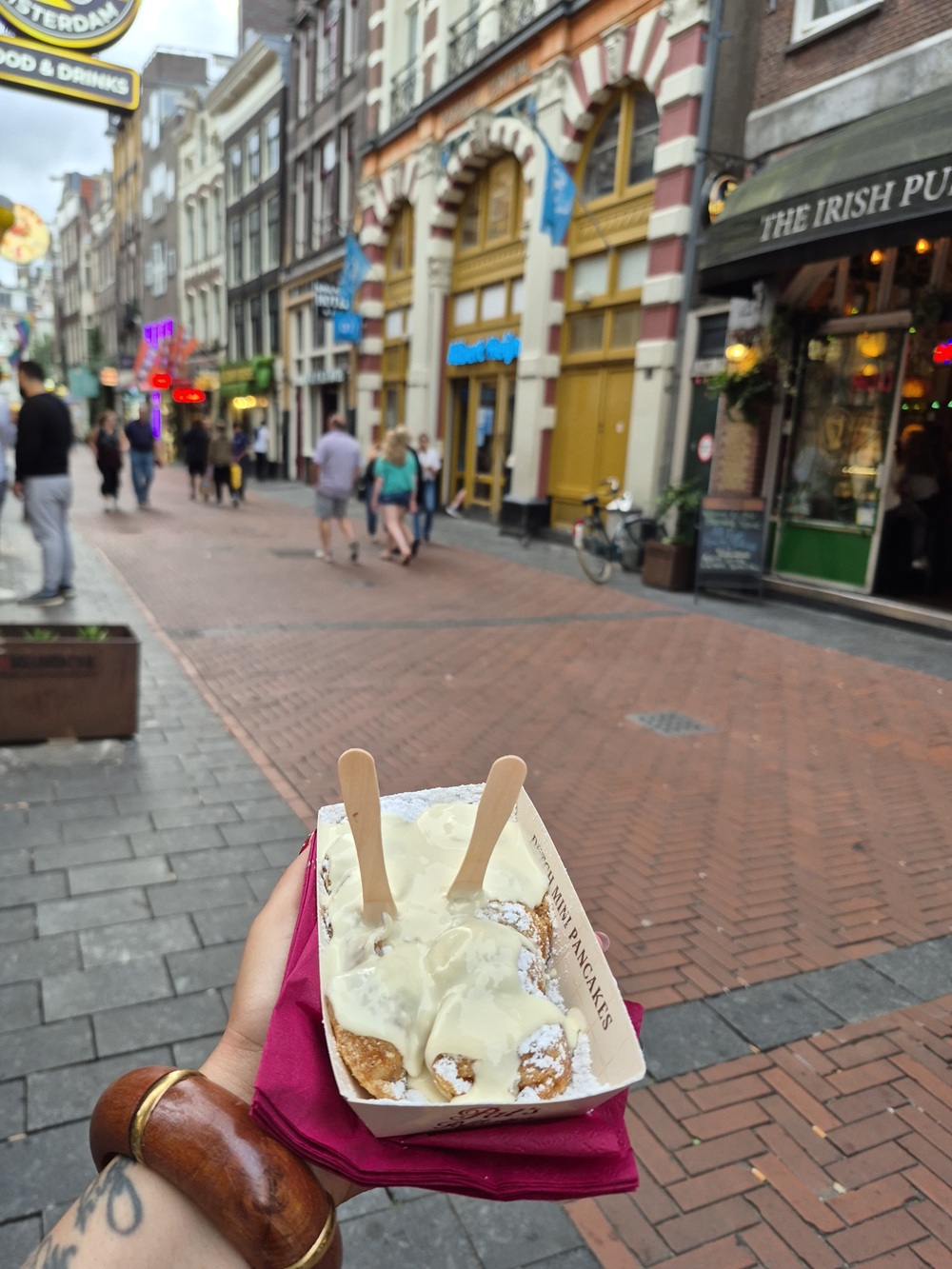
Small food stops double as useful reset breaks for toddlers and parents.
Utrecht: 1 day
Utrecht is one of the easiest and most rewarding day trips from Amsterdam. It combines canals, historic architecture and a genuinely useful indoor pause.
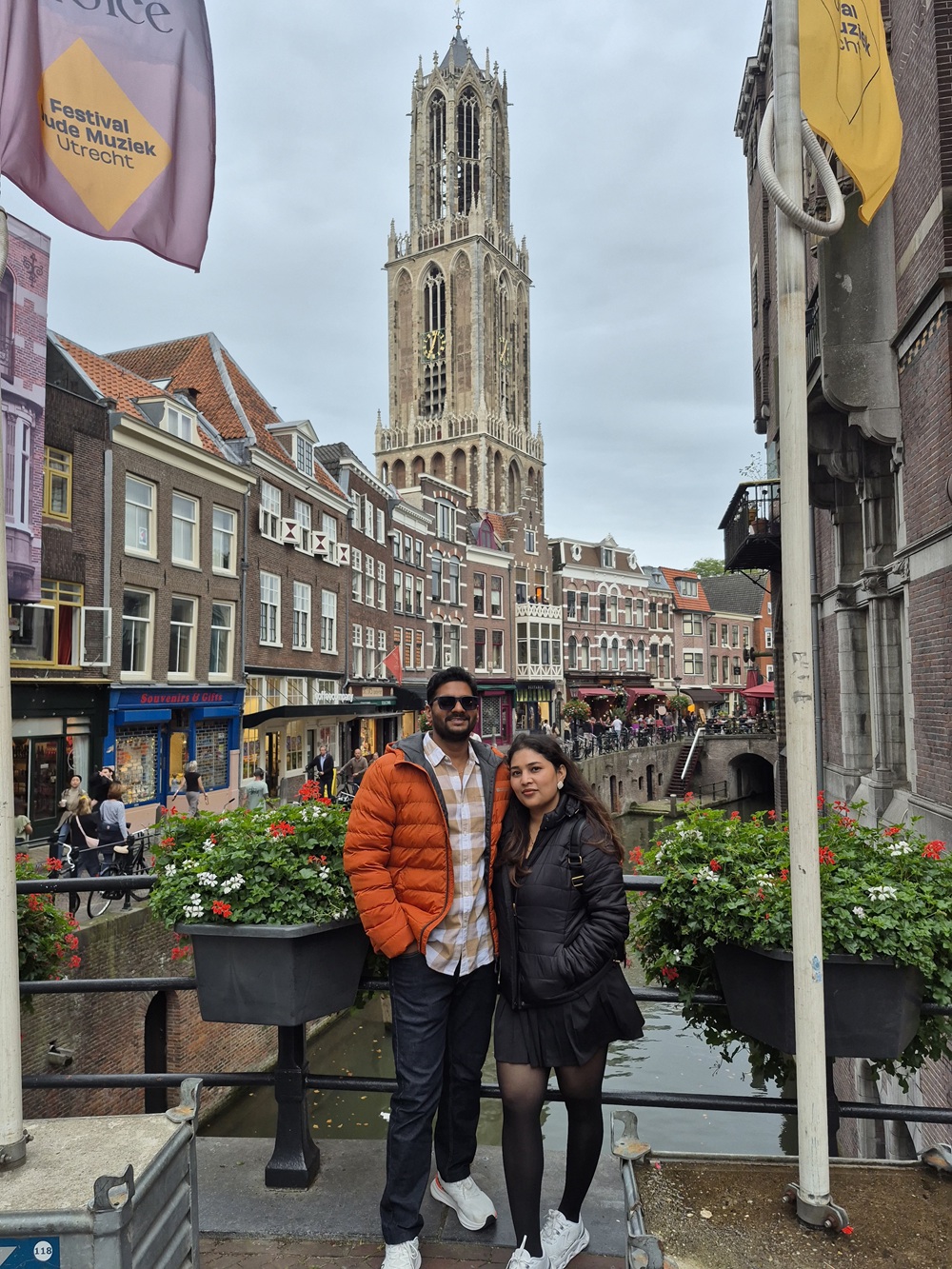
- Walk along the canal area.
- Book ahead if you want the Dom Tower experience.
- Visit Utrecht Library for quiet downtime.
- Keep the afternoon loose for cafés, canals and play.
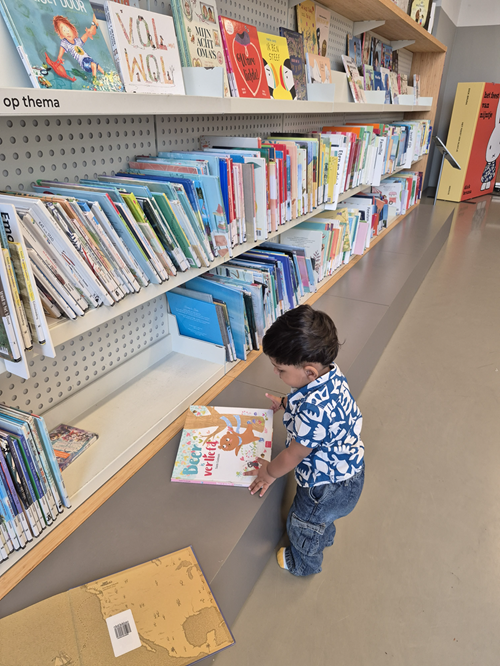
Utrecht Library is a built-in pause button: warm, calm and toddler-friendly.
Utrecht is a quick rail trip from Amsterdam, but check the live NS journey planner from your exact starting station.
Giethoorn: 1 day
Giethoorn deserves a full day because reaching the village takes longer than a typical city day trip.
- Choose a covered canal cruise for an easy toddler win.
- Follow it with a short village walk.
- Stop for a slow lunch or snack.
- Leave free time instead of chasing every viewpoint.
You can reach Giethoorn by train and bus or by car. The journey is part of the day's pacing, so avoid adding another destination.
Den Bosch: half a day to 1 day
Den Bosch is ideal when you want a shorter Dutch outing.
- Walk through the historic centre.
- Explore the canal area.
- Take a slow café break.
- Try the city's famous Bossche Bol, traditionally associated with Jan de Groot.
The city is well connected by Dutch rail. Confirm the easiest route from your base in the live NS planner.
How to connect this Europe route
The simplest strategy is trains between major cities and a car only where it genuinely improves the day.
- Munich to Salzburg: train; direct city-centre connection.
- Salzburg to Hallstatt and Obertraun: rental car with a correctly fitted child seat; roughly 1.5 hours to Hallstatt, with fewer transfers and more flexibility. Public transport is also possible.
- Munich to Paris: train; a long but straightforward city-centre journey.
- Paris to Amsterdam: direct Eurostar services may be available; verify the timetable for your dates.
- Amsterdam to Utrecht: frequent NS trains.
- Amsterdam to Giethoorn: train and bus, or car; reserve a full day.
- Amsterdam to Den Bosch: NS train.
With a toddler, the route with fewer transfers is often worth more than a small saving. Build buffer time around every intercity move and keep arrival-day plans optional.
The toddler travel playbook
Protect sleep
Protect the nap when you can. Do not schedule the next must-see around a tired child. A hotel reset is not lost sightseeing time if it saves the evening.
Keep food simple
Carry snacks and at least one familiar option. Every city day needs an easy meal that does not depend on a reservation or a patient toddler.
Bring both stroller and carrier
A compact stroller is useful for long city walks. A carrier handles stairs, viewpoints, cobbles, crowded stations and places where a stroller becomes awkward.
Plan play on purpose
A playground is not a detour. Put it into the itinerary deliberately, especially after museums, train journeys or formal meals.
Keep one indoor backup
Weather and moods change. NEMO, Utrecht Library or a relaxed café can rescue a day without feeling like a compromise.
Leave the 20% empty
The blank space is where you discover a neighbourhood, sit beside a lake, let your toddler play with local children or simply return to the hotel early.
The best itinerary is the one that still leaves your family with enough energy to enjoy tomorrow.
Before-you-go checklist
Book ahead
- Neuschwanstein Castle tour, if visiting
- Paris Seine cruise
- Hallstatt funicular or Skywalk, if required for your dates
- Rental car and child seat for Hallstatt and Obertraun
- Intercity and Eurostar trains
- Any timed museum or tower experience you genuinely want
Check the day before
- Attraction opening hours
- Train disruptions or engineering works
- Weather and toddler clothing
- Restaurant opening hours
- Nap and meal windows
- Stroller access and the need for a carrier
Frequently asked questions
Is Europe toddler-friendly?
Yes. Many European cities work well with toddlers because they offer walkable centres, parks, trains and short activities. The main challenges are cobbles, stairs, crowds and old stations without easy lift access, which is why a stroller-carrier combination helps.
How many activities should I plan each day?
Plan one anchor activity and one flexible activity. Anything else is a bonus. This creates room for meals, naps, queues, weather changes and spontaneous play.
Is it better to travel Europe by train or car with a toddler?
Use trains between major cities and rent a car only when it reduces several transfers or unlocks a scenic rural day. For this itinerary, a car is most useful for Hallstatt and Obertraun.
Should I take a stroller or carrier to Europe?
Take both if you can. Use the stroller for distance and the carrier for stairs, cobbled streets, viewpoints and crowded transport.
What is the best toddler-friendly stop on this route?
There is no single best stop, but Munich's English Garden, Utrecht Library, NEMO Science Museum and Obertraun's lake-and-playground combination are especially useful because they give children space to reset.
Can I do this route in two weeks?
Yes, but you will need to remove one or two day trips or shorten a base. For a calmer two-week version, prioritise Munich with one Austrian day trip, Paris, Amsterdam and either Utrecht or Giethoorn.
The rule worth remembering
Do not judge a family travel day by how many things you ticked off. If your toddler played, everyone ate, you saw something beautiful and nobody melted down, it was a successful day.
Save this itinerary, choose the destinations that fit your family, and keep the empty space. That is where the holiday begins.
Comments